

On 11–12 February, North America’s first BioBoosters hackathon focusing on forest-based insulation for industrial housing construction was held.
The aim of the innovation competition was to address two urgent and interconnected challenges in Canada: increasing housing construction through new, innovative solutions, and strengthening value creation in Ontario’s forest sector through the development of advanced, wood-based building products.
Seven selected companies from Sweden, Finland, Norway, and Canada gathered in Toronto for two days of intensive work to further develop ideas for fibre-based insulation solutions. The challenge was formulated by the Canadian construction company Stelumar. Throughout the process, the teams received qualified guidance from industry experts, government representatives, and innovation leaders. The objective was to develop scalable and sustainable solutions that can be directly implemented in Stelumar’s industrial, large-scale, AI-driven production of modular buildings.
Svenska Termoträ’s Solution Stood Out
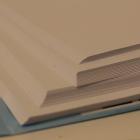
The winner of the hackathon was the team from Svenska Termoträ. They presented a wood-based insulation solution with strong acoustic, thermal, and fire performance properties. The team also contributed experience in offsite industrial construction and demonstrated clear potential to utilise locally sourced raw materials from Ontario.
The jury highlighted the proposal as a compelling example of how innovation, sustainability, and manufacturability can work together to accelerate the development of low-carbon building solutions. Following the hackathon, Svenska Termoträ will continue collaborating with Stelumar to further develop the concept towards production.
“Innovation will be crucial to the future of housing construction in Canada, particularly as we seek new ways to increase supply while improving sustainability and performance. The unique format of the hackathon gave us close insight into the expertise and creativity being directed towards real challenges in housing and sustainable construction. We were impressed by the quality of the ideas presented. We now look forward to continuing our collaboration with the winning team to evaluate how the solutions can be integrated into our production,” says Peter Hass, General Manager at Stelumar.
“With the Stelumar Hackathon, we have addressed both the need for transition towards a more bio-based future and new business opportunities for European companies,” says Gry Lenschow Andersen, Project Manager of Circular Bioeconomy Arena and Paper Province.
The hackathon was organised by the Swedish cluster Paper Province, the Canadian cluster CRIBE, the Interreg Sweden–Norway project Circular Bioeconomy Arena, and the producer Stelumar.
About Circular Bioeconomy Arena
Circular Bioeconomy Arena is an EU-funded Interreg Norway–Sweden project focused on cross-border collaboration to develop more circular solutions within the forest-based bioeconomy in Sweden and Norway. Project partners are Paper Province, Norwegian Wood Cluster, Innovatum Science Park, and Dalarna Science Park.
About Stelumar
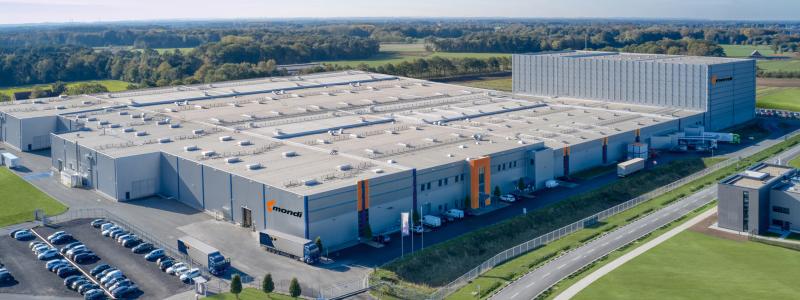
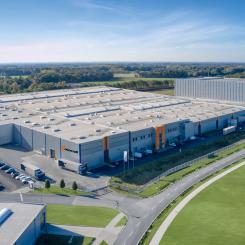
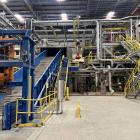
Stelumar Advanced Manufacturing Inc. is a technology-driven company working to transform housing construction in Canada through advanced modular building solutions. The company was founded by Canadian entrepreneur Peter Gilgan, founder of Mattamy Homes, and combines automation, robotics, and AI to modernise the construction sector and help address the housing shortage. With state-of-the-art production facilities in Toronto, Canada, Stelumar focuses on shortening construction times, improving quality, and making housing more accessible. Stelumar manufactures precision-built wall, floor, and roof systems, modular units, and interior millwork at industrial scale.
About Paper Province
Paper Province is a Swedish cluster and innovation environment focused on the forest-based bioeconomy. The organisation brings together companies, academia, public actors, and research institutes to strengthen the development of sustainable, bio-based products, services, and business models.
About CRIBE
CRIBE is Ontario’s leading accelerator for forest-based innovation. The organisation is an independent, non-profit actor supporting the development of a sustainable and profitable forest-based bioeconomy in the province. CRIBE brings together researchers, the forest sector, and end users to develop and commercialise innovative, forest-based, low-carbon solutions for a range of industries.