

Finnish forest industry group UPM and South African paper producer Sappi have signed a definitive agreement to combine their European graphic paper operations into a new joint venture valued at approximately €1.42 billion.
The transaction, announced in a stock exchange release by UPM, marks one of the most significant consolidation moves in Europe's graphic paper sector in recent years.
The new company will combine UPM Communication Papers with Sappi’s European graphic paper business. The partners will each hold a 50% stake and operate the venture as an independent company under an agreed shareholder framework.
Declining demand drives consolidation
The deal comes as the graphic paper industry continues to struggle with long-term structural decline.
Digitalisation, falling newspaper circulation and reduced demand for printed publications have forced producers across Europe to close mills, reduce capacity and pursue efficiency improvements.
The companies estimate annual synergies of around €100 million through the combination.
For UPM, the transaction also further reduces exposure to a market segment that has faced declining demand for more than two decades. In recent years, the company has increasingly focused its investments on speciality papers, pulp, biomaterials, energy and renewable fuels.
UPM to receive nearly half a billion euros
Under the agreement, UPM Communication Papers is valued at €1.1 billion, while Sappi’s European graphic paper business is valued at €320 million.
UPM will receive €475 million in cash and €98 million in shareholder loan receivables.
In addition, approximately €411 million in pension liabilities and other obligations will be transferred from UPM to the joint venture.
Sappi will receive €90 million in cash together with €10 million in shareholder loan receivables.
The transaction will be financed primarily through debt raised by the new company. Financing arrangements include €600 million in external funding and a €100 million revolving credit facility arranged by Citi and Nordea.
Expected to improve profitability
UPM expects the transaction to strengthen operating margins, improve its balance sheet and reduce leverage.
By transferring liabilities and pension obligations to the joint venture, the company will also free up capital that can be deployed elsewhere within the group.
The agreement represents another milestone in the extensive restructuring that has reshaped the European paper industry over the past twenty years.
Regulatory approvals still required
The transaction remains subject to approval by Sappi shareholders as well as competition authorities in the European Union, the United States and China.
The European Commission has already opened an in-depth review of the proposed combination. UPM says it continues to cooperate with regulators throughout the process.
Final approvals are expected before the end of 2026.
Fewer players in a shrinking market
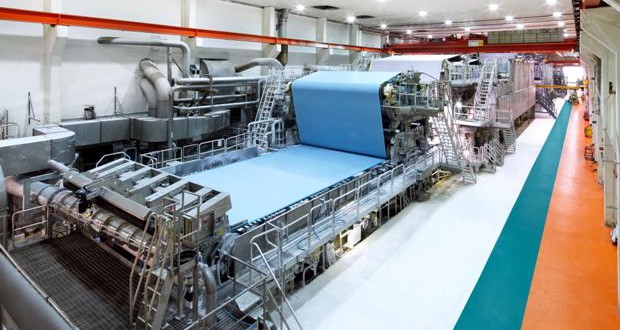
If approved, the joint venture will become one of Europe's largest producers of graphic paper.
However, the transaction also highlights the continuing challenges facing the sector. Demand for newsprint and magazine paper has steadily declined across Europe, leading to repeated mill closures in Finland, Sweden and other countries.
Rather than signalling future growth, the merger is widely viewed as an effort to align production capacity with a market that continues to contract. For the remaining industry participants, long-term competitiveness increasingly depends on cost efficiency, operational scale and profitability in a mature and shrinking sector.
Source: UPM stock exchange release, 28 May 2026.
Fact Check:
UPM has steadily reduced its exposure to graphic paper over the past decade while investing heavily in pulp, renewable fuels, energy and speciality products. The European graphic paper market has experienced a substantial decline since the early 2000s due to digitalisation and changing media consumption habits. The UPM-Sappi transaction reflects a broader industry trend in which producers seek to address falling demand through consolidation, capacity reductions and cost-saving measures rather than expansion.