




The European Commission is introducing limited simplifications to the controversial EU Deforestation Regulation (EUDR), while making it clear that the legislation itself will remain fully in force. No further delays or renegotiations of the law are being considered.
The message came as the Commission published its latest simplification review of the EUDR, the EU’s far-reaching regulatory framework aimed at reducing global deforestation linked to products sold within the bloc.
The regulation has faced strong criticism for several years from the forestry industry, agricultural groups, and multiple trading partners outside the EU. Critics argue that the rules risk creating extensive bureaucracy, higher costs, and new trade barriers without delivering sufficiently clear environmental benefits.
Despite mounting pressure, Brussels has now signalled that the legislation will move forward as planned.
– The EUDR will remain in force, and the Commission has no intention of reopening the regulation itself, the Commission stated in its report.
Companies must prove products are deforestation-free
The EUDR, adopted in 2023, requires companies to demonstrate that products sold within the EU have not contributed to deforestation after December 31, 2020.
The rules apply to commodities including timber, soy, palm oil, cocoa, coffee, beef, rubber, and a range of products derived from those materials.
Companies are required to provide detailed information on the origin of raw materials, including geographic coordinates for plantations and forest areas. The requirements apply to both importers and European companies operating within the EU market.
The EU has described the regulation as a key tool to combat global deforestation and protect biodiversity. However, opposition has continued to grow, particularly among the European forestry sector and countries such as the United States, Brazil, and Indonesia.
In its latest review, the Commission attempts to address part of the criticism through technical simplifications and selected exemptions.
Packaging materials and some products exempted
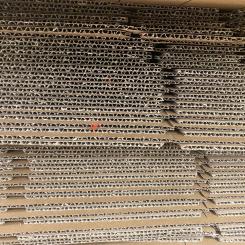
One of the most notable changes concerns packaging materials. The Commission now proposes exemptions for several categories of single-use packaging, reusable transport packaging, and certain logistics materials. Product samples, used goods, and waste materials are also expected to fall outside the scope of the regulation.
At the same time, Brussels aims to clarify which products are actually covered by the rules. Amendments have been introduced to avoid unintended inclusion of products made from materials such as bamboo or coconut oil.
Meanwhile, some new products are being added to the regulation, including instant coffee and selected palm oil derivatives.
The Commission claims the simplifications could reduce administrative costs for companies by around 75 per cent compared with the original implementation framework.
However, the changes mainly involve technical adjustments, digital reporting systems, and compliance procedures. The core structure of the legislation remains unchanged.
Industry criticism continues
Several industry organisations argue that the proposed changes do not go far enough.
The European State Forest Association, EUSTAFOR, says the revised framework still imposes substantial administrative burdens on small and medium-sized companies in the forestry sector.
US officials have also repeatedly pushed the EU to soften the rules. Washington has argued that American production carries a very low deforestation risk and that the EUDR could function as a trade barrier against US exports.
Despite that pressure, the European Commission has not proposed any broad exemption for American producers.
The regulation has already been delayed twice because of technical difficulties and criticism from both member states and industry groups. Following the latest review, however, it is increasingly clear that Brussels does not intend to allow further postponements.
At the same time, uncertainty remains over how effective the system will be in practice. Several companies and industry groups warn that global traceability requirements could become extremely difficult to enforce, particularly across complex international supply chains.
For Sweden’s forestry industry and export-oriented companies, the Commission’s decision means extensive adaptation efforts are still expected in the years ahead.
Source: European Commission, EUSTAFOR, ICIS, Forbes.
Fact check
EUDR stands for the European Union Deforestation Regulation and officially entered into force in 2023. Implementation deadlines have since been postponed following criticism from companies, EU member states, and international trading partners. The regulation is intended to reduce the EU’s connection to global deforestation through stricter traceability and documentation requirements for selected commodities and products.