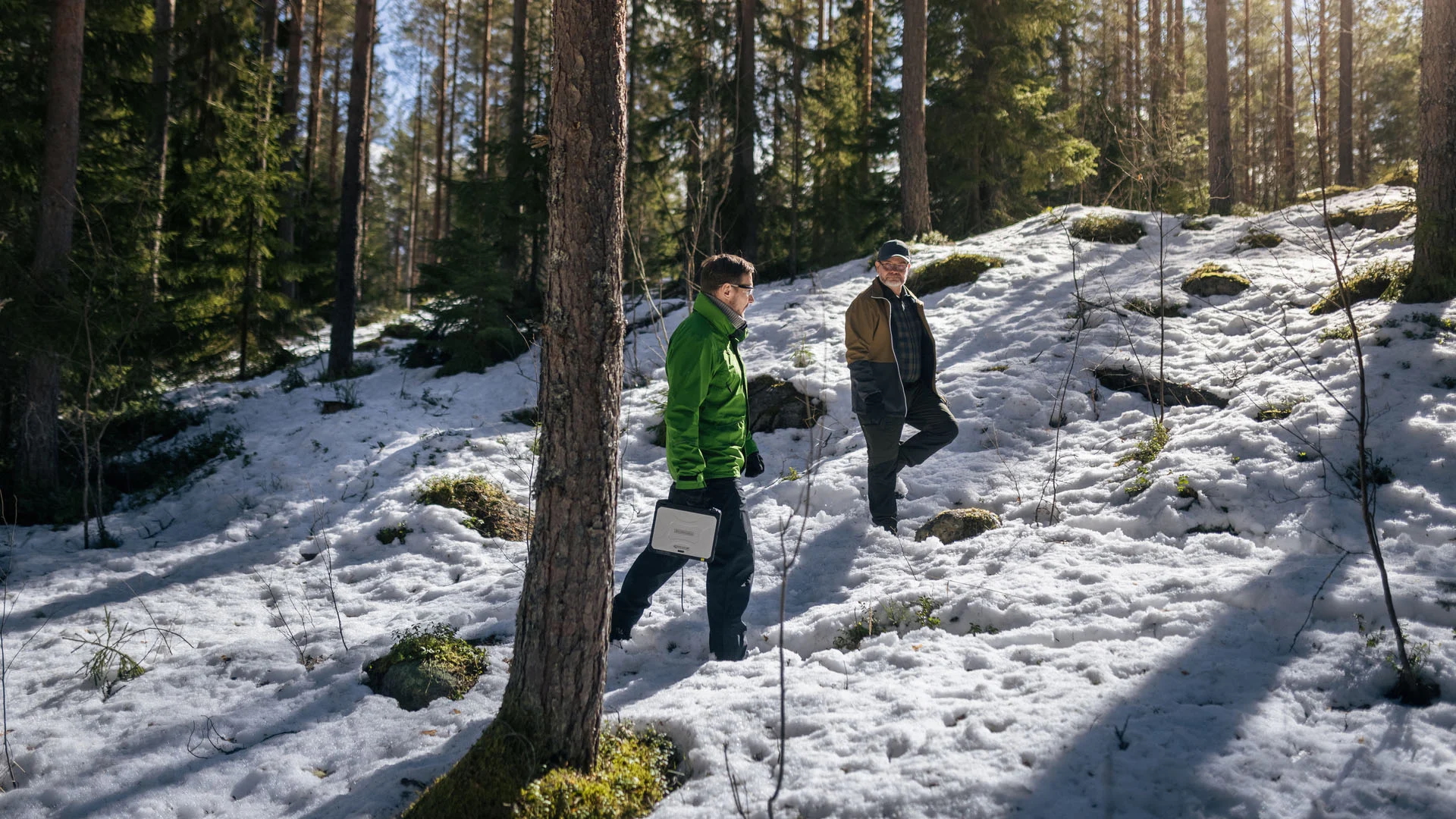




Finnish forest industry group UPM is launching a research partnership with the University of Eastern Finland to study how peatland restoration affects water quality and ecosystems. The initiative forms part of a new doctoral training program focused on the ecological impacts of forestry and nature management.
The research will examine how restoring drained peatlands influences water chemistry and biodiversity in nearby waterways immediately after restoration work. The aim is to provide practical data on how different restoration methods affect water quality and ecosystems in and around peatland areas.
The company’s own forests will serve as research sites and pilot areas, allowing results to be tested directly in operational forestry. The four-year project is scheduled to begin in spring 2026.
– “We want to create more responsible, safer and more productive forestry methods through research and development. We need research-based knowledge about how our operations affect tree growth, forest health, economic performance and the state of waters, climate and biodiversity,” said Janne Uuttera, head of research and development at UPM Forest, in a press release.
He added that the company’s doctoral program is designed to support long-term research and enable rapid implementation of findings.
– Our doctoral training program enables long-term, high-level research whose results can be directly applied in UPM’s forests, while also developing our service offering to forest owners and influencing practices across the entire sector, Uuttera said.
University chosen for peatland expertise
UPM selected the University of Eastern Finland as its first academic partner due to its long track record in peatland, water ecology and restoration research.
– “Because of the research theme, we chose the University of Eastern Finland as the partner for the first doctoral thesis. There is extensive expertise and a long research tradition in this field,” Uuttera said.
The university is also part of the Academy of Finland’s Centre of Excellence programme for 2026–2029, focusing on peatlands, climate change and restoration.
Anna Laine-Petäjäkangas, associate professor at the university’s School of Forest Sciences, described the collaboration as timely.
– The research cooperation that has now been launched is a very necessary and timely initiative, where we can also utilise and combine the university’s expertise in peatland and aquatic ecology, she said.
Four-year doctoral project
The first doctoral candidate will conduct research within the LUMETO doctoral program covering natural sciences, forestry and technology. Scientific supervision will be provided by the University of Eastern Finland, with Anna Laine-Petäjäkangas and Professor Raine Kortet acting as supervisors.
Funding comes from UPM, the LUMETO doctoral program, the university’s forest sciences department and the Academy of Finland’s Centre of Excellence program.
Peatland restoration has become an increasingly important issue in Finland for both water protection and climate policy. At the same time, tensions remain between forestry’s need for productive land and environmental requirements to restore previously drained peatlands. The research is expected to provide data on how restoration measures affect water systems and biodiversity in practice.
Source: UPM press release.
Fact check
Peatland restoration typically involves raising water levels in previously drained bogs to restart natural processes. While restoration can improve biodiversity, it may also affect water quality in nearby waterways, making detailed research essential.