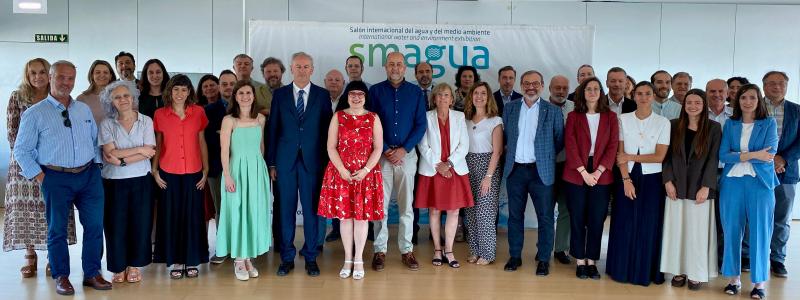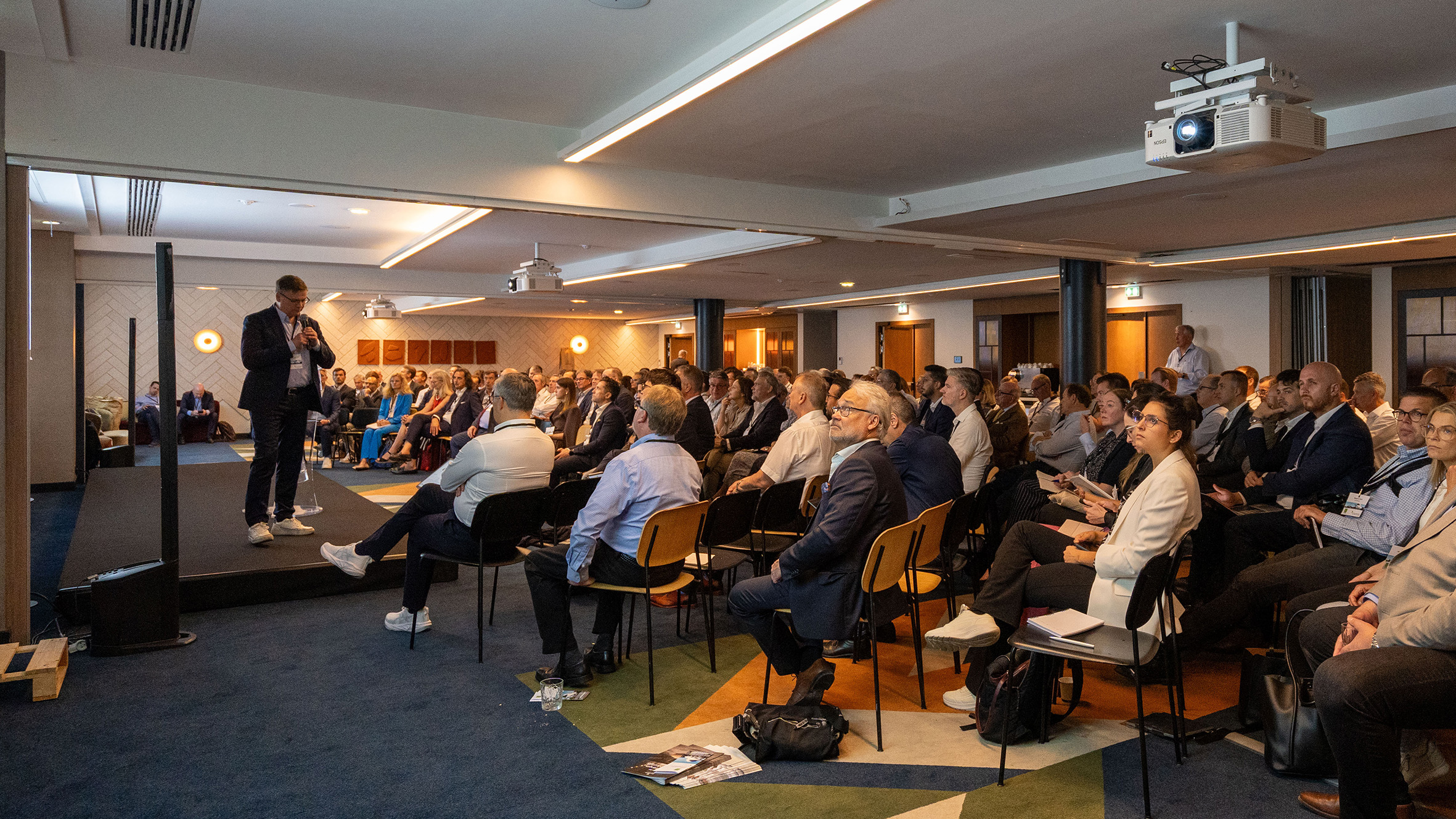




With a record attendance of more than 160 industry experts, the EUROSAC Congress 2026 took place in Bordeaux, France, from 28–30 May. Under the theme “Turning regulation into opportunities”, participants explored how evolving legislation, sustainability requirements and circular economy initiatives can become drivers of innovation, competitiveness and business growth.
One of the congress highlights was the EUROSAC Grand Prix Award ceremony, showcasing some of the industry’s most innovative paper-based packaging solutions. Gascogne claimed the Gold Award for SingleLip Paper, while Billerud secured Silver for QuickFill® Plus Xcel. The Bronze Award was presented to dy-pack for handy², and Mondi won the Industry Special Award for Ad/Vantage StretchWrap. The audience’s favourite was DosePack, another Gascogne innovation, which received the Public Choice Award.
“Regulatory, economic and geopolitical developments are creating unprecedented complexity for our industry,” said EUROSAC President Alessandro Selmin at the opening. “In this rapidly changing environment, EUROSAC is the place to be.
By connecting industry leaders, sharing knowledge and engaging on key issues at the European level, we help to transform challenges into opportunities. The growing participation in our congress and the increasing membership of our association give us every reason to be confident about the future.” During the congress, Alessandro Selmin was re-elected President of EUROSAC for another two-year term.
Positive market development continues
The European paper sack market maintained its positive momentum in 2025, with deliveries increasing by 2.7% to reach 5.69 billion units. Growth was primarily driven by building materials (excluding cement) at +2.2%, food products at +5.4% and milk powder at +6.3%. Italy remained the largest market, followed by Germany and Turkey. The first quarter of 2026, however, presented a mixed picture, with overall deliveries declining by 1.4%. Despite this, the building materials segment continued to grow, while milk powder recorded strongincreases across all markets, underlining the resilience of these sectors in a challenging economic environment. A similar trend can be observed in the United States, where domestic paper sack shipments grew by 2.2% in 2025, followed by a decline of 3.6% in the first quarter of 2026.
Navigating the regulatory landscape
The congress theme was reflected in discussions on Europe’s evolving regulatory framework. Roberta Colotta from Flexible Packaging Europe highlighted how the Packaging and Packaging Waste Regulation (PPWR) is accelerating the transition towards a more circular economy and creating new opportunities for sustainable packaging solutions. Her conclusion: paper sacks are already on a good path to deliver many of the characteristics that the regulation seeks to promote, including recyclability, and the efficient use of resources.
While Colotta focused on regulatory developments, Bernard Lombard from CEPI broadened the perspective with insights into the geopolitical and trade developments shaping Europe’s pulp and paper value chain. In an increasingly complex global environment with significantly shifting trade flows, he stressedthe importance of maintaining a competitive and resilient European industry in a context of fair competition.
Supporting the industry’s sustainability journey
Participants also received updates on a range of collaborative initiatives supporting the industry’s sustainability ambitions, including the latest LCI and carbon footprint study, the industry’s net-zero pathway, the Construction Goes Circular recycling initiative as well as a new carbon footprint calculator. The transition towards a circular economy was further explored by Arne Jost from CEFLEX, who discussed ways to accelerate the transition towards more circular flexible packaging solutions. His key takeaway: circularity starts with design.
Combined with advances in recycling technologies and demand for recycled content, sustainable packaging design must continue to gather pace as a cornerstone of the circular economy.
Creating impact with communication
In her particularly lively presentation, communication expert Andrea Vilallonga highlighted that successful communication in business depends not only on what is said, but also on how messages are conveyed and perceived. In times of transformation and increasing stakeholder expectations, effective communication plays a vital role in building trust, driving change and turning ideas into action.
EUROSAC Grand Prix Award 2026
A highlight of the congress was the EUROSAC Grand Prix Award, which recognises outstanding innovations that combine performance, sustainability and customer value. This year, nine entries competed for the prestigious awards. “It is impressive to see the diversity of the submissions, each reflecting different challenges, perspectives and approaches to innovation,” said EUROSAC President Alessandro Selmin. “They demonstrate our industry’s ability to continuously develop solutions that meet evolving market requirements.” Jury president Herbert Rode also praised the high quality, creativity and versatility of the entries, noting that selecting the winners had been a challenging task.
Grand Prix Award winners 2026
The Gold Award went to SingleLip Paper from Gascogne. Developed for the food ingredient and non-food ingredient markets, the innovative packaging solution responds to a growing demand for reduced plastic use without compromising product protection or performance. With a fibre content of 85%, the sack combines a high-performance barrier, a hermetic closure system and compatibility with existing production lines. Recyclable in conventional paper streams and free from PFAS, it offers brands a practical way towards more circular packaging solutions while anticipating future regulatory requirements.
The jury was particularly impressed by its reduced plastic dependency and its potential to reclaim applications that had shifted towards alternative packaging in the past.
The Silver Award was presented to Billerud for QuickFill® Plus Xcel, a new generation of sack kraft paper combining ultra-high porosity with exceptional strength. Designed for increasingly fine filling goods such as low-carbon cements, it enables faster filling, cleaner operations and reduced material consumption without compromising performance. Higher productivity, lower packaging weight and reduced product losses contribute to lower costs and carbon emissions across the value chain, while also improving workplace cleanliness. The jury particularly valued how the innovation takes the relationship between porosity and strength to a new level, delivering both economic and environmental benefits. With handy², dy-pack earned the Bronze Award for rethinking how heavy building materials are handled. The innovative sack concept puts ergonomics at the centre of packaging design. Its novel two-sided carrying handle with integrated folded flap allows heavy loads to be carried more comfortably and with greater control, reducing physical strain and improving workplace safety. At the same time, the design supports lighter sack constructions with lower plastic usage.
The jury recognised the solution’s potential to address a long-standing challenge in the construction sector by making the handling of heavy products safer and more user-friendly.
Mondi received the Industry Special Award for Ad/Vantage StretchWrap, a paper-based alternative to conventional plastic stretch film for pallet wrapping. Combining high load stability with compatibility for existing wrapping processes, the solution enables companies to significantly reduce their dependence on fossil-based plastics. Recyclable in established paper streams, made from renewable materials and offering a substantially lower carbon footprint than conventional stretch film, it supports companies in advancing their sustainability goals.
The jury recognised its considerable potential to replace plastic wrapping not only in the paper sack industry, but across a wide range of industrial applications.
A clear favourite among congress participants, DosePack from Gascogne was voted the winner of the Public Choice Award. While the industry has made major advances in barrier performance, strength and recyclability, DosePack puts the end user at the centre of packaging design. Created for applications such as pet food, animal feed and food ingredients, the innovative paper sack rethinks how products are handled. Its integrated dispensing and dosing system enables cleaner, more intuitive handling while maintaining the high protection standards required for sensitive products.
EUROSAC is the European Federation of Multiwall Paper Sack Manufacturers. The federation represents over 80% of European paper sack manufacturers. Its members operate in 20 different countries. They produce some 5 billion paper sacks per year, representing 630,000 tonnes of paper converted in 55 plants. Sack manufacturers from all continents and bag manufacturers also contribute to the federation as corresponding members, and more than 30 suppliers (paper, film, machine or glue manufacturers) are registered as associate members.