

By: Simon Matthis
I think we are all aware of modern society's overreliance on hydrocarbons, but few were able to predict the extent to which this is true—as the recent crisis in the Middle East illustrates.
A very limited geographical area—the Strait of Hormuz, comparable in size to the rather “unstrategic” Strait of Messina—has, in a sense, held the entire world hostage, suspended by the unpredictable will of a few powerful actors. It is almost unreal.
It appears as though the world runs solely on oil and gas, while other industrial activities and manufacturing sectors are considered so much less important that they become nearly irrelevant in geopolitical dynamics.
Whatever the long-term impact of the Middle East crisis may be, it should serve as a wake-up call. It should prompt the development of businesses and industries that are less reliant on hydrocarbons and therefore less vulnerable to future geopolitical crises like the one we are currently witnessing. One such industry is pulp and paper, which forms part of the emerging “bioeconomy”—a concept we will likely hear more about, especially if conflicts in the Middle East linger.
Some economists argue that we have moved beyond the hegemony of oil, which dominated the 20th century. I am no longer so convinced. The impact of the Middle East crisis shows that this claim is quite premature; we remain firmly in the grip of oil.
This is not only about energy and fuel for the transport sector. Hydrocarbons are also used in the production of synthetic plastics and barrier coatings, making the current crisis not just an energy issue but a raw material supply chain crisis.
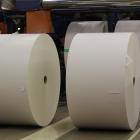
This highlights the pivotal role the pulp and paper industry can play in replacing and supplementing plastics across many sectors—not primarily because of environmental benefits, but because of economic viability. In this way, industries can help countries become more resilient, more self-reliant, and less vulnerable to supply chain disruptions beyond their control. This is particularly relevant for countries with abundant forest resources, such as those in Northern Europe, including Finland and Sweden.
The argument here is, once again, not primarily environmental. Fossil-free alternatives are, above all, the most resilient and economically sustainable option.
The recent backlash against ESG frameworks and renewable energy sources, such as wind and solar power, has made purely environmental arguments less convincing. Moreover, studies have shown that in some cases plastics may be more environmentally friendly than certain fossil-free alternatives, especially when they are easier to recycle and reuse.
Funding organizations worldwide are also increasingly focused on “competitive edge.” In other words, environmentally friendly solutions must first prove their financial viability and sustainability before receiving funding.
Today’s hydrocarbon crisis does not eliminate the advantages of synthetic plastics mentioned above, but it undoubtedly makes them less available—that is, more vulnerable to supply chain disruptions. The pulp and paper industry should therefore realign its marketing efforts to this new reality, emphasizing the clear advantage that its materials are less exposed to global supply chain risks.