


The use of microfibrillated and nanofibrillated cellulose – commonly known as MFC and NFC – continues to attract interest in the paper industry. The materials can improve paper strength, surface structure and barrier properties, but many mills still struggle to apply them consistently in large-scale production.
Low solids content, complex rheology and uneven distribution across the paper web often lead to process instability and production interruptions.
Engineers Bernard Pyzdrowski and Brian Moran from spray technology company Spraying Systems Co. have now presented a series of strategies designed to improve the application of nanocellulose on paper machines. Their recommendations are based on operational experience from industrial trials and paper mill installations.
The goal is to make production more stable when nanocellulose is used as a coating layer or functional additive in paper and packaging products.
Air-assisted spraying improves distribution
According to the engineers, the choice of application method is a critical factor. Conventional coating systems often struggle when dealing with suspensions that combine low solids content with relatively high viscosity.
MFC and NFC suspensions can reach viscosities of roughly 14,000–20,000 centipoise at about 2 per cent solids. These conditions limit the effectiveness of many traditional wet-end and dry-end application methods.
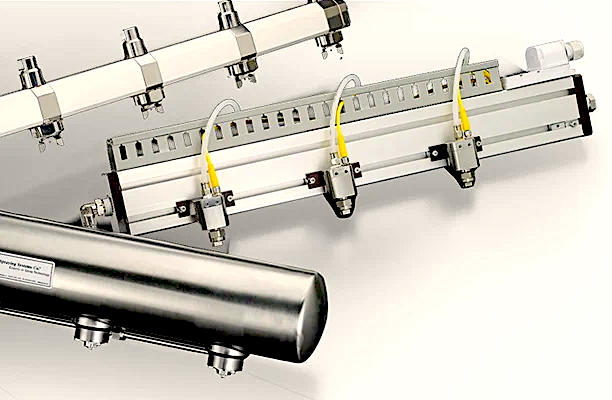
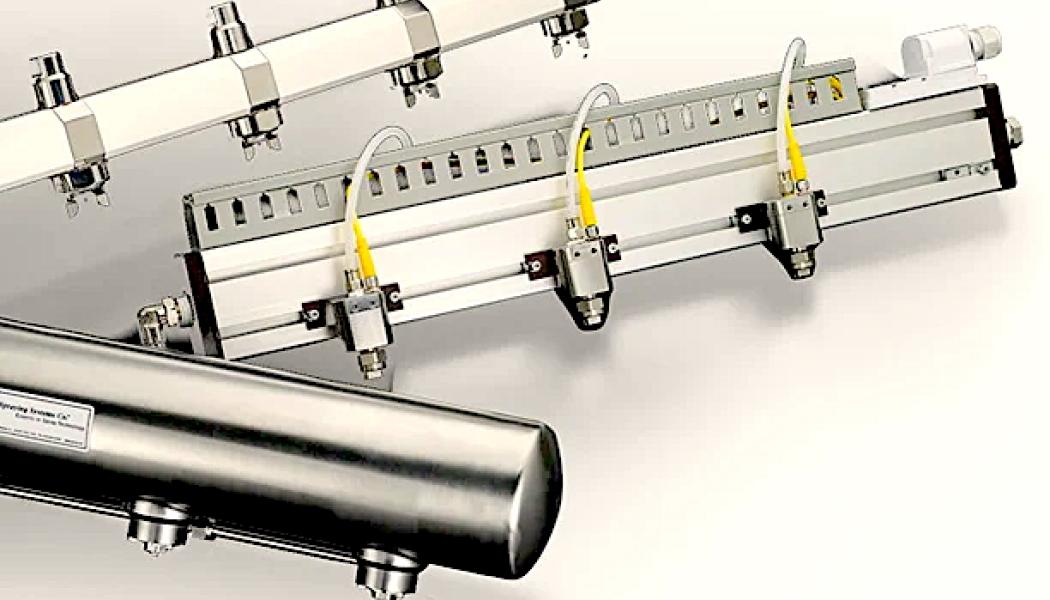
Air-assisted spray systems are increasingly used as an alternative because they allow the material to be distributed more evenly across the moving paper sheet.
– With independently controlled liquid flow, fan air and atomising air, operators can adjust application conditions for machine speed, droplet size and cross-direction coverage, the authors explain in material published by Spraying Systems Co.
One recommended approach is to begin with a low liquid pressure of around 5 psi, moderate fan air and higher atomising air. This helps establish a stable spray pattern before coat weight adjustments are made.
Cross-direction variation causes waste
Another recurring challenge in paper production is cross-direction variation, often referred to as CD variation. Uneven distribution across the width of the paper sheet can quickly lead to material waste and machine downtime.
To reduce such variations, the engineers recommend defining the spray height and nozzle spacing early in the process. Once these parameters are fixed, operators can select the appropriate fan angle and nozzle overlap to achieve uniform coverage.
The authors also suggest that paper mills use coating-weight calculation models that take into account machine speed, solids content, spray angle and nozzle configuration when setting up the process.
Technical solutions such as clean-out needles and specialised nozzle designs that prevent material buildup can further improve operational stability during long production runs.
Laser imaging reduces costly trials
A third strategy involves improving how spray patterns are measured before full production begins.
Instead of relying solely on visual inspection, laser-based imaging tools can capture the size, shape and distribution of spray patterns in real time.
– By linking laboratory settings to actual mill operating conditions, it becomes possible to reduce trial time and reach stable production more quickly, the engineers note.
Such systems can also be used to create reference libraries containing examples of acceptable and unacceptable spray patterns. Operators can then compare current process conditions with these references during start-up and grade changes.
The engineers also emphasise that maintenance and service-friendly design play an important role in ensuring reliable operation. Quick-release nozzle mounts and recirculation systems that keep the material moving can reduce the risk of clogging and sedimentation.
Growing interest in nanocellulose
Nanocellulose has attracted increasing attention from researchers and industry because of its potential to strengthen paper products and improve barrier performance. It is also being explored as a component in a range of bio-based materials.
Despite this interest, the technology remains relatively new in industrial applications. Many paper mills are still refining how nanocellulose should be integrated into existing production processes.
Small adjustments in equipment design and process control can therefore have a significant impact on whether the technology performs reliably in continuous operation.
Source: Spraying Systems Co.
Fact check:
Microfibrillated cellulose (MFC) and nanofibrillated cellulose (NFC) are produced by mechanically breaking down cellulose fibres into extremely fine structures. The materials are used in the paper industry to enhance strength and barrier properties, but their high viscosity and complex flow behaviour can create challenges in large-scale manufacturing.