




The Nordic pulp industry enters 2026 in a fragile position, weighed down by high raw material costs and uncertain demand. At the same time, analysts point to signs that the global market may gradually tighten during the year.
According to industry assessments from Fastmarkets, operating rates at global pulp mills could rise to around 91 per cent in 2026 and 2027 – a level that has historically marked the point at which pricing power begins to shift back to producers.
However, the recovery remains slow. Margins continue to be squeezed by fibre cost inflation and volatile energy prices. Several market observers argue that further production curtailments may be required to rebalance supply and demand and reduce persistent overcapacity.
China’s rapid expansion of paper and board capacity continues to exert downward pressure on global prices. The resulting oversupply risks prolonging weak pricing and could eventually trigger new trade measures in Europe and the United States. At the same time, major Latin American producers such as Suzano and Arauco are continuing to invest in new capacity, ensuring additional future supply.
Nordic producers squeezed by timber costs
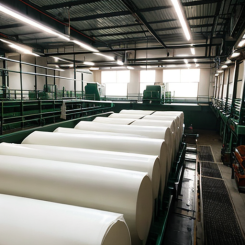
At the Östrand pulp mill in Sweden, bleached softwood kraft pulp, known as NBSK, is produced as a premium grade. The mill is equipped with modern technology designed to minimise emissions to air and water. In sulphate pulp production, wood chips are cooked into pulp and then bleached to the required brightness using TCF (Total Chlorine Free) or ECF (Elementary Chlorine Free) processes to achieve very pure cellulose fibres.
The Swedish forest industry group SCA announced in February that it would raise the price of long-fibre pulp in Europe by 100 dollars per tonne. The new target price is 1,710 dollars per tonne for deliveries from March onwards.
Despite the increase, resistance has been reported in several European markets, including Italy, where demand remains subdued.
In Finland, prices for both sawlogs and pulpwood have remained at historically high levels, putting significant pressure on mill profitability. In Sweden, prices for pine and spruce have declined due to a weaker sawn timber market. The forest owners’ association Södra has reported weak earnings, citing expensive raw materials and soft demand.
In Norway, softwood pulpwood prices are slightly higher than in neighbouring countries, although cost pressures remain elevated there as well.
Debate over Finnish overcapacity
Finnish forest companies UPM and Stora Enso reported lower earnings for the fourth quarter of 2025. According to Stora Enso, packaging and pulp markets have stabilised, but at a low level.
In Finland, a debate is intensifying over structural overcapacity in the pulp sector. Some analysts argue that the country may have the equivalent of one pulp mill too many in relation to raw material costs and current demand. Production curtailments have already been reported at several facilities in order to safeguard margins.
At the same time, companies are seeking new revenue streams. UPM is investing heavily in biofuels and biochemicals, while interest in carbon capture at pulp mills and the production of advanced biofuels is growing across the Nordic region. These initiatives, however, are capital-intensive and are being pursued in an environment of high interest rates and cautious investors.
Overall, the Nordic pulp industry enters 2026 with cautious hopes of stabilisation, but faces clear risks linked to overcapacity, high timber costs and continued global price pressure.
Sources: Fastmarkets, ResourceWise, Global Wood Markets Info, Talouselämä, Arvopaperi.
Fact check
An operating rate of around 90–91 per cent is widely regarded in the pulp industry as a critical threshold where the balance between supply and demand may begin to favour producers. Below this level, price pressure typically intensifies.