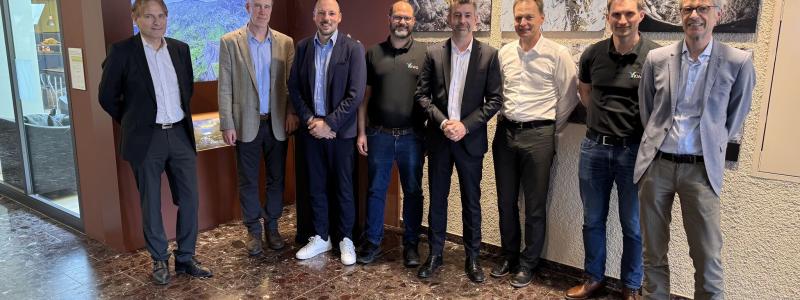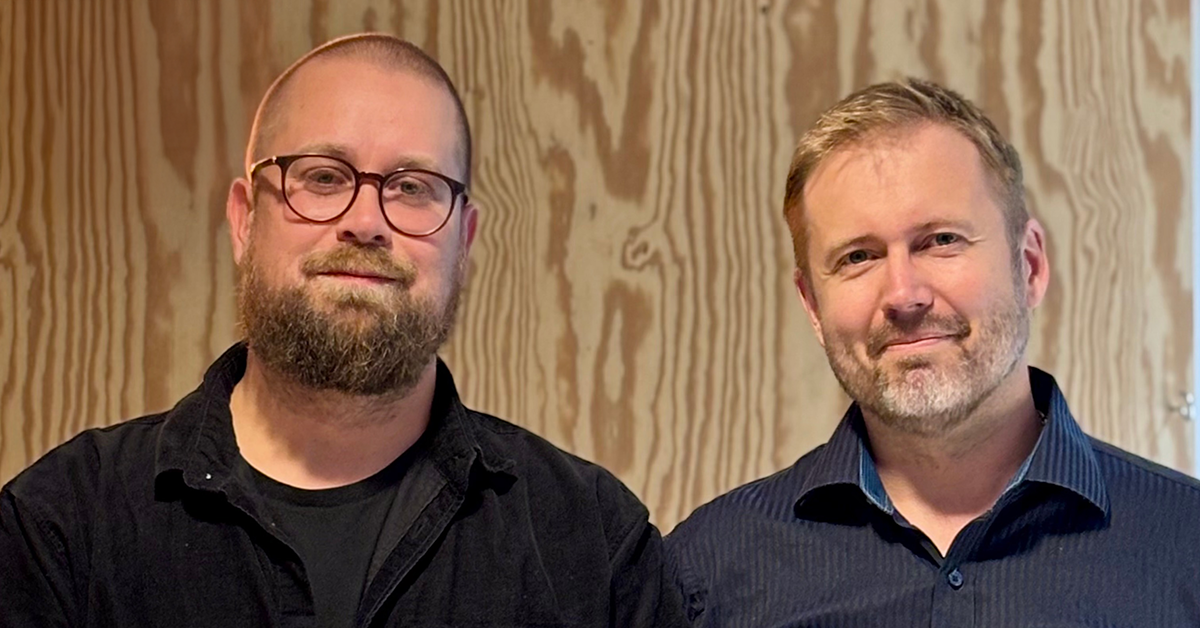



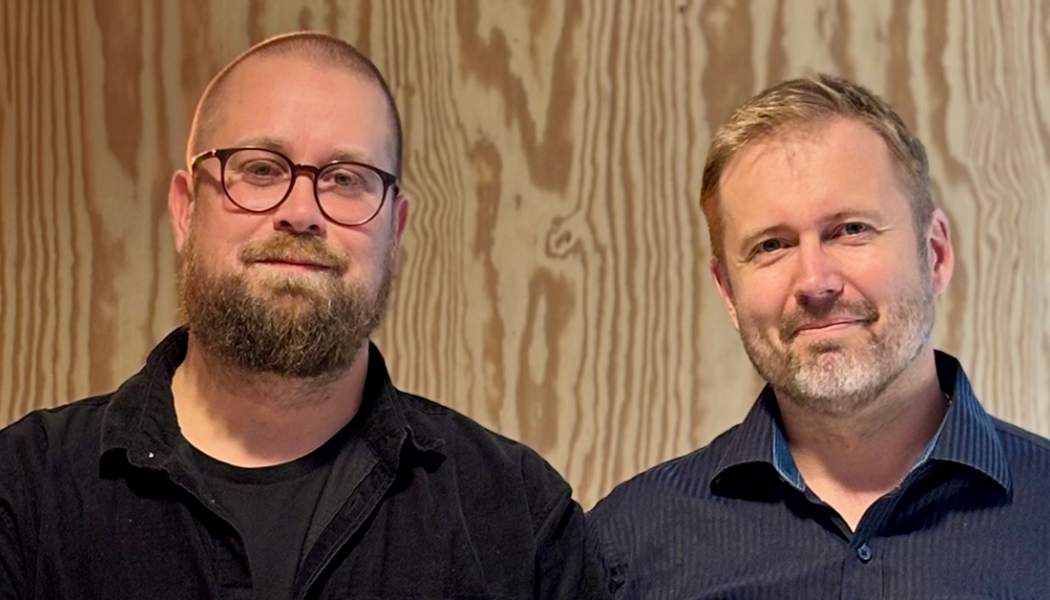
Christian Höök and Mathias Kristoferqvist, both doctoral candidates at the Swedish University of Agricultural Sciences (SLU), are the founders of the startup EcoVibes. Photo: BizMaker
Thanks to a new technology, the founders of the startup EcoVibes aim to simplify the measurement of biodiversity. Their solution should facilitate the detection and protection of rare species, as well as the selection of the most suitable areas for forestry and construction projects, right from the initial stages.
“Biodiversity surveys using sound sensors, a technique that could be described as ‘clandestine listening in the forest,’ are effective, safe, and do not disturb the environment being studied in any way,” explains Christian Höök, one of the founders, in a press release from Bizmaker, a platform dedicated to entrepreneurship, innovation, and the attractiveness of Västernorrland.
Biodiversity surveys are an important but time-consuming process. Until now, most of this work has been done “on foot, in the forest,” but the EcoVibes team, based in Örnsköldsvik, wants to change that.
The idea was born during a quiet moment in the forest, when Christian Höök began to reflect on the richness of life that can be perceived through sound. Three years later, with Mathias Kristoferqvist, a forester and doctoral student at the Swedish University of Agricultural Sciences (SLU) in Umeå, he developed a first prototype.
EcoVibes' software uses AI capable of recognizing the sounds of species such as the three-toed woodpecker or the capercaillie. The goal is to teach it to identify a wide range of species, "from songbirds to buzzing insects to the rustling of trees."
"Thanks to bioacoustics and data processing, we can create a powerful tool to determine which species are actually present in a given location. If you hear a three-toed woodpecker, it's there," explains Christian.
EcoVibes hopes its tool will provide more and more precise information about forest life, thus facilitating land-use planning "from the outset."
– This type of product has been in demand for a long time. It can be used to improve processes across all sectors, from forestry to major infrastructure projects. Thanks to secure and detailed data, businesses and authorities can plan better, reduce risks, and minimize costly setbacks and delays, explains Johan Vestberg, Head of Business Development at BizMaker, where EcoVibes recently joined the Business Incubator program.
According to BizMaker, inventorying with EcoVibes technology offers numerous advantages over traditional methods. Instead of requiring inventory takers to be on-site for extended periods, acoustic enclosures can be installed to collect data continuously. Furthermore, the environment is not disturbed in the same way as with traditional methods.
"All our contacts, from forestry companies to the mining industry and government agencies, are enthusiastic about this technology," says Mathias.
To date, the EcoVibes software has analyzed more than 2,700 hours of audio recordings.
In parallel, the team is working on developing a standard for bioacoustic inventory and implementing its first pilot projects. The long-term goal is to create a unique knowledge base that will help preserve biodiversity and contribute to better decision-making.
“We don’t want to just be an analysis and reporting company; with all the data we receive, we will become the Google of bioacoustics,” concludes Mathias.