


The Finnish forest industry group UPM-Kymmene reported stronger-than-expected results for the first quarter of the year. Despite the solid performance, the company chose to maintain its existing guidance, prompting questions from investors and analysts.
Behind the cautious stance lies a more complex picture. While the energy segment continues to perform well, conditions in the core forest business remain weak, with demand and profitability still under pressure.
– We see both risks and opportunities in the current geopolitical environment, said CEO Massimo Reynaudo during the company’s earnings presentation.
Strong start, uncertain direction
UPM’s January–March results exceeded expectations, leading several analysts to question why the company did not upgrade its outlook for the rest of the year.
The issue was raised repeatedly during a webcast following the quarterly report. However, the company chose to stick to its previous guidance.
One explanation is that the earnings boost was largely driven by the energy business, which has benefited from high electricity prices and stable output. At the same time, performance in other parts of the group remains uncertain.
Forest sector remains under pressure
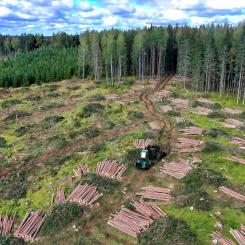
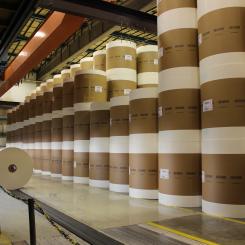
UPM’s traditional core operations – pulp, paper and wood products – show limited signs of recovery. Demand remains subdued, while costs and competition continue to weigh on margins.
Analysts note that positive signals from the forest sector are scarce, despite the overall strong quarterly result. This creates an imbalance in the company’s earnings profile.
Global factors are also contributing to uncertainty. The ongoing conflict between Iran and United States is affecting energy markets and trade flows, indirectly impacting industrial companies such as UPM.
– The geopolitical situation brings both risks and opportunities, but uncertainty remains high, Reynaudo added.
Energy supports – but not enough
In recent years, UPM has expanded its focus on energy production, including hydropower and nuclear power stakes in the Nordic region. This segment has delivered stable profitability and provides a buffer when the forest business weakens.
However, strong contributions from energy are not enough to fully offset the challenges in other divisions. This is one of the reasons behind the company’s cautious outlook.
At the same time, uncertainty around future industrial investments is increasing, as rising costs, volatile energy prices and political decisions affect competitiveness across Europe.
Caution despite strong results
UPM’s decision to maintain its guidance reflects a broader trend in European industry, where many companies are holding back on new forecasts amid uncertain demand.
For investors, this creates a mixed picture. In the short term, the company shows resilience, but structural challenges remain in the longer term – particularly within the forest sector.
UPM’s performance for the rest of the year will depend heavily on whether demand in its core business improves and how the global economy evolves.
Source: Analysis based on UPM’s quarterly report and analyst call
Fact check
UPM is one of Europe’s largest forest industry groups, operating in pulp, paper, wood products and energy. In recent years, the company has diversified to reduce its reliance on traditional paper markets.