


Södra's operating profit for the first quarter of 2013 amounted to SEK -84 million. Profit after net financial items amounted to SEK -73 million.
The markets for Södra's products have been impacted by the current recession and the strong Swedish krona. Södra's operating profit for the first quarter of 2013 amounted to SEK -84 million. Profit after net financial items amounted to SEK -73 million.
Efficiency and cost-cutting initiatives implemented in the autumn of 2012 have resulted in lower costs. Net sales fell by almost SEK 400 million compared with the first quarter of 2012. This reduction is explained in part by the fact that production has ceased at Södra Cell Folla. Despite lower net sales, earnings - excluding non-recurring items - were up compared with the same period last year.
"The early part of the year has gone well in terms of production, but we continue to face challenges in the form of the economic situation and currency exchange rates. However, things are starting to look a little brighter on the market side of things," commented Gunilla Saltin, Acting Group President.
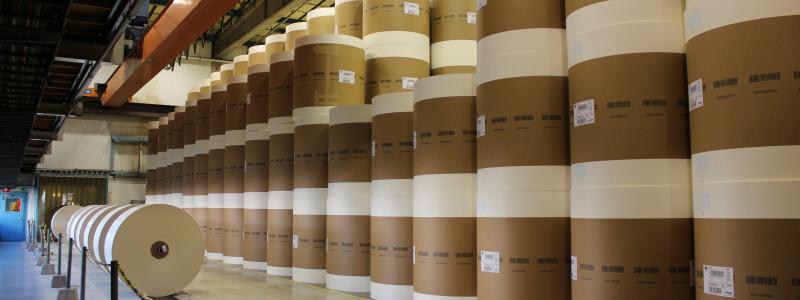
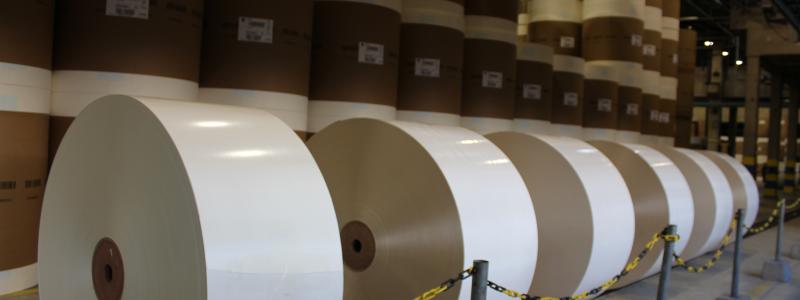
The pulp market is relatively well balanced despite the recession in Europe, and prices for both softwood pulp and hardwood pulp have increased during the quarter. The latest increase took effect on 1 March, when Södra increased the price of bleached softwood sulphate pulp to USD 860 per tonne, and of bleached hardwood pulp to USD 820 per tonne. Both Södra's production and deliveries of pulp increased compared with the same period in 2012.
"We are continuing to see growth on the pulp market. An improvement in market balance in the spring means that we will have the scope to implement further price increases in the future," added Saltin.
Pulp production at Södra's four pulp mills over the period amounted to 469,000 tonnes, compared with 380,000 tonnes over the same period last year. Textile pulp has been in production at Södra Cell Mörrum for more than a year. Textile pulp production is based on hardwood and has resulted in a new market for Södra Cell.
Södra has been attempting for some time now to achieve profitability at Södra Cell Tofte, but it has not been possible to turn the tide despite a number of measures being implemented. This was why a process began in October 2012 with a view to finding a buyer for the mill. The original plan was to cease production at the mill during the second quarter of this year if no feasible buyer could be found. However, discussions concerning the sale are currently in progress.
The market for sawn timber products remains weak. We are seeing positive signals from the USA, Japan and China, where Swedish timber currently holds small market shares. Demand from our main markets in Europe is weak. However, production in Europe has been adapted to match the low demand, and as a result we have been able to avoid oversupply. High raw material prices combined with a strong Swedish krona and the weak market are having an adverse impact on profitability.
"We expect to see slightly higher prices for sawn timber products over the year. With raw material prices and currency exchange rates as they are, 2013 will nevertheless be a tough year for Southern Swedish sawmills," continued Saltin.
Södra produced 359,000 cubic metres of sawn timber products during Q1 2013, compared with 356,000 cubic metres over the same period last year. Work on increasing production at the new sawmill in Värö is ongoing, and production will switch to a three-shift system in the autumn.
The market for interior products is cautious in Sweden and remains weak in Denmark. However, both sales and earning capacity are better in Norway.
In February, Södra increased the price of its spruce timber by SEK 40/m3fub. With this, the price of spruce timber was returned to the level prevailing throughout much of the 2011/2012 timber year.